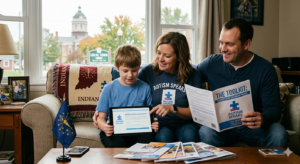
Your child’s first ABA therapy session focuses on building comfort and trust with the therapist — often called “pairing” — more than structured teaching. Expect a lot of play, minimal demands, and a therapist actively working to become a safe, familiar presence before introducing any formal skill-building.
For most families, the first session looks far more relaxed than they expected.
If you’re feeling nervous ahead of your child’s first appointment, that’s completely normal — most of that nervousness fades once you see what a session actually looks like. Here’s a full walkthrough of what to expect, how to prepare, and what happens in the sessions that follow.
Why the First Session Focuses on “Pairing,” Not Teaching
In ABA therapy, pairing refers to the process of a therapist associating themselves with positive, enjoyable experiences before asking anything of the child. This isn’t a delay tactic — it’s foundational to how effective ABA actually works. A child who sees their therapist as a source of fun and safety engages far more willingly with learning than one who experiences the therapist as someone who only makes demands. Skipping this step to “get to the real work” faster typically backfires, producing more resistance, not less.
What Happens Before the First Session
By the time your child’s first session happens, several steps have usually already taken place:
- Intake paperwork and insurance verification completed
- An initial assessment by a BCBA, either as part of the diagnostic evaluation or a separate intake assessment
- A draft treatment plan with initial goals, based on that assessment and your family’s priorities
- Scheduling and introductions with the RBT who will be delivering ongoing sessions
This means the first session isn’t starting from zero — the team already has a working understanding of your child before they walk in the door.
A Realistic Walkthrough of the First Session
| Phase | What Typically Happens |
| Arrival & introductions | The RBT (and sometimes BCBA) introduces themselves to your child at their pace — no pressure for immediate interaction |
| Free play observation | The therapist observes your child playing naturally, noting preferred toys, activities, and communication style |
| Pairing activities | The therapist joins your child’s play, following their lead, to build rapport before making any requests |
| Light, low-pressure requests | Small, easy asks may be introduced gradually — often embedded in play rather than presented formally |
| Wrap-up & parent check-in | The therapist briefly summarizes observations and answers any questions before ending the session |
Your Role as a Parent During the First Session
In an in-home model, parents are typically present and involved from the very first session — not just watching, but actively part of the process. The therapist may ask you questions about your child’s routines, preferences, and communication style throughout, since your insight is a genuine part of building an effective plan. Your presence can also help your child feel more comfortable with an unfamiliar person in the early stages.
If Your Child Cries, Resists, or Won’t Engage
This happens more often than parents expect, and it doesn’t mean anything has gone wrong. A new person and a new routine are a lot to process, especially for a young child. A skilled RBT will slow down, prioritize your child’s comfort and safety over any planned activity, and let trust build at whatever pace your child needs — even if that means the entire first session is mostly about simply being in the same room together. Pushing through resistance too quickly tends to set back rapport-building rather than speed it up.
What Happens in the Sessions That Follow
Once rapport is established — sometimes within the first session, sometimes over several — sessions gradually introduce more structured skill-building, blended with the naturalistic teaching and play your child already associates with the therapist. The BCBA continues reviewing data regularly and adjusts the treatment plan as your child progresses, so the program keeps evolving rather than staying static.
How to Prepare Your Child (and Yourself)
- Keep the explanation simple and positive. “A friend is coming to play and help you learn new things” is usually enough.
- Have a few favorite toys or activities accessible, since the first session often follows your child’s lead.
- Clear distractions where possible if sessions happen at home, to help your child focus and reduce overstimulation.
- Manage your own expectations. A calm, low-drama first session is a good sign, even if it doesn’t look like “therapy” in the way you might have pictured.
- Write down questions ahead of time so you don’t forget them once the session starts.
Common Mistakes Parents Make
Mistake 1: Expecting visible “results” from session one. The first session is about relationship-building, not skill acquisition — progress comes later.
Mistake 2: Over-explaining or building anxiety beforehand. Too much buildup can create nervousness that wasn’t there to begin with.
Mistake 3: Stepping in too quickly during resistance. Give the RBT room to work through initial hesitance using their training, rather than intervening at the first sign of tears.
Mistake 4: Not asking questions. The first session is a natural opportunity to understand how communication, scheduling, and progress updates will work going forward.
Expert Recommendations
- Judge the first few sessions on comfort, not content. A child who’s gradually warming up to their therapist is exactly on track, even without visible “lessons” yet.
- Stay engaged as a parent from day one rather than treating early sessions as pure observation time — your involvement is part of what makes the model effective.
- Ask how and when you’ll receive progress updates so you know what to expect going forward.
- Give the process a fair runway. Rapport-building and early data collection typically take a few sessions before the program shifts into more visible skill-building.
Frequently Asked Questions
How long is the first ABA therapy session?
First sessions are often similar in length to regular sessions, though some providers schedule a shorter initial visit focused specifically on pairing and rapport-building before transitioning into a full-length session format.
Will my child do structured work in the first session?
Usually not right away. Most providers prioritize building rapport and comfort first, often called “pairing,” before introducing structured teaching, so the first session may look mostly like supervised play.
Do parents stay in the room during the first session?
This varies by provider and setting. In-home ABA sessions typically involve parents throughout, especially early on, since the goal includes coaching caregivers alongside the child.
What if my child cries or refuses to engage during the first session?
This is common and expected, especially with a new person in an unfamiliar routine. A skilled RBT will slow down, prioritize comfort and safety over structured activities, and gradually build trust rather than pushing through resistance.
How many people will be at the first session?
Typically, the RBT delivering ongoing sessions attends, and in many cases a BCBA joins as well to observe and finalize the treatment plan directly with the family.
What should I tell my child before their first ABA session?
A simple, low-pressure explanation works best, such as “a friend is coming to play and help you learn new things.” Avoid over-explaining or building anxiety about the appointment in advance.
Will goals be set during the first session?
Formal goals are usually already outlined in the treatment plan developed after the diagnostic evaluation, but the first few sessions often involve fine-tuning specific targets based on direct observation of the child.
What should I have ready at home for an in-home ABA session?
A relatively quiet, distraction-reduced space, a few of your child’s favorite toys or snacks, and clearing enough time in your schedule to be present and available for coaching are typically all that’s needed.
How soon will I see progress after the first few sessions?
Meaningful progress typically builds gradually over weeks and months, not the first few sessions. Early sessions focus heavily on rapport, comfort, and baseline data collection rather than visible skill gains.
Can I ask questions during the first session?
Yes. The first session is a good opportunity to ask the RBT or BCBA about session structure, how progress will be tracked and communicated, and how you can reinforce skills between sessions.
Conclusion
The first ABA session is rarely the intense, clinical experience some parents brace for — it’s usually closer to structured, supervised play, built entirely around helping your child feel safe with a new person before anything else happens. Trust takes priority over teaching, and that’s exactly how it should be.
If your child is starting ABA therapy soon, or you’re still exploring whether it’s the right next step, our team is happy to walk you through exactly what the first session will look like for your family. Little Hearts ABA delivers Natural Environment ABA Therapy directly in your home, with parents involved and coached from the very first visit. Contact our team today to get started.